



LED grow lights are luminaires utilizing LED chips in a modern and efficient way to produce light for growing plants. LED grow lights come in many shapes and sizes but as the most essential units of LED grow lights LED chips have most of the effect on the quality of the light, i.e. spectrum (colors) and photon flux (“brightness”) produced. Since LED grow light manufacturers can choose the LEDs they use in their lamps, it is important to understand which kind of LED grow light best fits the specific application. One of the advantages of LED grow lights compared to traditional lighting solutions is the ability to match the light to the needs of plants.
Advantages of LED Grow Light
Long life span: A single LED light bulb lasts for 5 to 10 years. While LED lights are pricier than HID and CFL, they're affordable in the long run. You don't have to buy replacement bulbs for years!
Easy to install: You don't need a professional to install LED grow lights in your garden. As long as you buy enough grow lights for your garden, you can do the installation on your own. Some LED grow lights can be attached overhead in a frame with screws; others are similar to regular lamps with adjustable holders. What's important is the even distribution of light in every direction so plants can be exposed to bright light.
Energy-efficient: LED grow lights are the most energy-efficient of all grow light types. It's an excellent choice for big gardens requiring more grow lights. You will save a lot on electricity because LED lights are not power-hungry at all. Moreover, the bulbs do not require frequent changing, so you'll save more money on maintenance.
Low heat: As you know, too much heat can kill plants. This goes especially for a terrarium or greenhouse. Cooling systems are often installed in big gardens to regulate the temperature. LED grow lights do not produce heat despite their ability to produce bright to intense light. It won't affect the indoor temperature and cause plants to wilt. LEDs are perfectly safe for temperature-sensitive crops.
Full spectrum light: To grow plants using grow lights successfully, the bulb must mimic natural sunlight. This will require full spectrum light and specific color quality. HID grow lights produce less light and poor color quality than full spectrum LED grow lights. Some LED grow lights are also available to achieve different plant reactions, such as growing more leaves or bearing more fruits.
-
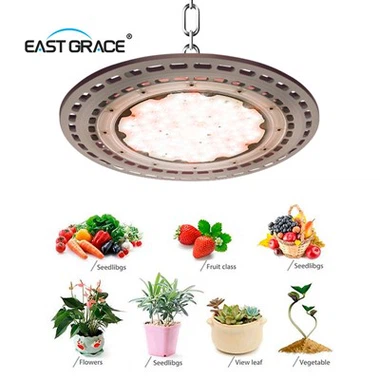
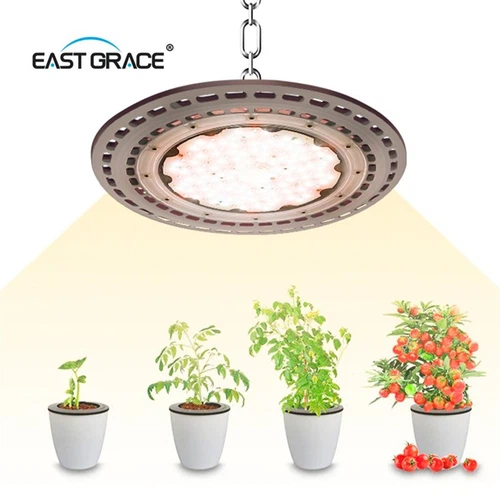
![UFO LED High Bay Grow Light Fixture]() UFO LED High Bay Grow Light FixtureEG-UHBGL-250 LED grow light has excellent lumen output, long-lasting stability, and brilliant vision. UFO LED high bay light fixture equipped with a 0-10V dimmable driver. An aluminum die-cast heat
UFO LED High Bay Grow Light FixtureEG-UHBGL-250 LED grow light has excellent lumen output, long-lasting stability, and brilliant vision. UFO LED high bay light fixture equipped with a 0-10V dimmable driver. An aluminum die-cast heat -
![DC Strip LED Grow Light]() DC Strip LED Grow LightDC Strip LED Grow Light housing is made of high-quality aluminum with good heat dissipation, which is perfect for shelves, germination, seed starting, fruiting, flowering, hydroponics, and potted
DC Strip LED Grow LightDC Strip LED Grow Light housing is made of high-quality aluminum with good heat dissipation, which is perfect for shelves, germination, seed starting, fruiting, flowering, hydroponics, and potted -
![T8 Integrated LED Tube Grow Light]() T8 Integrated LED Tube Grow LightThe EG-I8PATG-150 LED Grow Light specializes in indoor plant growth. The grow lights combine the full spectrum of blue and red lights for all stages of plant growth.. The EG-I8PATG-150 LED plant grow
T8 Integrated LED Tube Grow LightThe EG-I8PATG-150 LED Grow Light specializes in indoor plant growth. The grow lights combine the full spectrum of blue and red lights for all stages of plant growth.. The EG-I8PATG-150 LED plant grow -
![Foldable LED Grow Light Bar Module]() Foldable LED Grow Light Bar ModuleAn indoor plant grow light designed for growing tents and large growing spaces to improve your plant’s growth rate and its yields. The EG-FBMGL-720C-IN LED grow light is the perfect choice for your
Foldable LED Grow Light Bar ModuleAn indoor plant grow light designed for growing tents and large growing spaces to improve your plant’s growth rate and its yields. The EG-FBMGL-720C-IN LED grow light is the perfect choice for your -
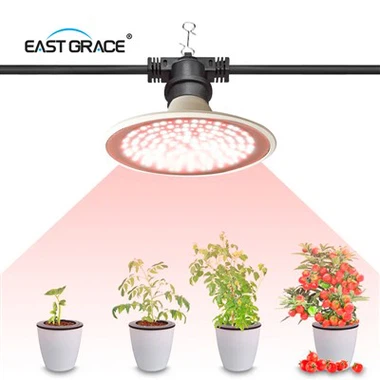
![UFO LED Grow Light Bulb B]() UFO LED Grow Light Bulb BAs we know, sunlight is essential for plant growth as it affects the photosynthesis of plants. They could not get enough sunlight for indoor plant, so they need an extra light source.. The
UFO LED Grow Light Bulb BAs we know, sunlight is essential for plant growth as it affects the photosynthesis of plants. They could not get enough sunlight for indoor plant, so they need an extra light source.. The -
![UFO LED Grow Light Bulb B]() UFO LED Grow Light Bulb BUFO LED Full Spectrum Grow Lights are ideal for indoor gardeners looking to enhance plant growth and overall yield. These lights are suitable for a variety of plant types and growth stages, making
UFO LED Grow Light Bulb BUFO LED Full Spectrum Grow Lights are ideal for indoor gardeners looking to enhance plant growth and overall yield. These lights are suitable for a variety of plant types and growth stages, making -
![Quantum Board Led Grow Light]() Quantum Board Led Grow LightProduct Feature:1. Shorten growth cycles2. lmprove color, shape and taste3. Custom light recipe to fit your crop and situation4. Easy installation
Quantum Board Led Grow LightProduct Feature:1. Shorten growth cycles2. lmprove color, shape and taste3. Custom light recipe to fit your crop and situation4. Easy installation -
![450nm Clip LED Grow Light]() 450nm Clip LED Grow LightProduct Features:1. Customized Spectrum Available2. Timmer Setting, 3 Switch Modes& 9 Dimming Levels3. Adjustable Clip with Rotatable Gooseneck
450nm Clip LED Grow LightProduct Features:1. Customized Spectrum Available2. Timmer Setting, 3 Switch Modes& 9 Dimming Levels3. Adjustable Clip with Rotatable Gooseneck -
![Customizable LED Grow Light Board]() Customizable LED Grow Light Board1.High PPE of 2.2–2.7 µmol/J for outstanding energy efficiency.2.0-10V dimming for precise control across growth stages.3.IP65 waterproof and dustproof rating.4.No-fan passive cooling for silent
Customizable LED Grow Light Board1.High PPE of 2.2–2.7 µmol/J for outstanding energy efficiency.2.0-10V dimming for precise control across growth stages.3.IP65 waterproof and dustproof rating.4.No-fan passive cooling for silent -
![Square LED Grow Light Panel App Available]() Square LED Grow Light Panel App Available1.High PPFD output suitable for close-range lighting (up to 250 µmol/m²/s @ 0.3m).2.90° beam angle for focused yet even coverage.3.IP20 rating optimized for clean indoor use.4.Easy hanging
Square LED Grow Light Panel App Available1.High PPFD output suitable for close-range lighting (up to 250 µmol/m²/s @ 0.3m).2.90° beam angle for focused yet even coverage.3.IP20 rating optimized for clean indoor use.4.Easy hanging -
![Friendly Use Slim LED Grow Light Panel]() Friendly Use Slim LED Grow Light Panel1.Ultra-slim 16mm thickness for space-saving installation.2.Full-spectrum SMD2835 LEDs with good PPFD values for close-range lighting.3.IP40 rating suitable for indoor home and greenhouse
Friendly Use Slim LED Grow Light Panel1.Ultra-slim 16mm thickness for space-saving installation.2.Full-spectrum SMD2835 LEDs with good PPFD values for close-range lighting.3.IP40 rating suitable for indoor home and greenhouse -
![Hot Sale Clip LED Grow Light]() Hot Sale Clip LED Grow Light1.Strong, adjustable clip with flexible gooseneck for versatile placement.2.USB-powered with adapter for easy setup anywhere.3.9-level dimming and multiple spectrum modes (Red / Blue /
Hot Sale Clip LED Grow Light1.Strong, adjustable clip with flexible gooseneck for versatile placement.2.USB-powered with adapter for easy setup anywhere.3.9-level dimming and multiple spectrum modes (Red / Blue /




Why Choose Us
Our Factory
East Graces has been involved in LED development since 2008, obtain the IEC 62471 of LED product safety in 2016. We are a professional producer at led modules, power supplies and different kinds of component for electronic and lights.
Our Product
We provide vary of lights, such as tubes, tri-proof lights, mosquito-killer lamp, and Ambient Light etc. Tubes and grow light are especially popular in the market.
Professional Team
East Graces continuing to provide excellency products and earn multiple innovation and patents, thanks to the specialized development team with advanced technology and high-performance automatic equipment endeavor.
Our Service
- Providing technical consultant service, design and customize for free
- Pleasing to visit the production procedure, inspection facilities and quality management system.
- Follow up producing schedule, quality monitoring and offer goods examine
LED (Light Emitting Diode) Grow light
LED grow lights are energy-efficient, long-lasting, and generate less heat than other types of grow lights. They often have adjustable spectrums, allowing gardeners to tailor the light to their plants' needs.
HPS (High-Pressure Sodium) Grow light
HPS grow lights emit a warm, orange-red spectrum, making them ideal for the flowering and fruiting stages of plant growth. They are less energy-efficient than LED lights but are widely used for their high light output and canopy penetration.
MH (Metal Halide) Grow light
MH grow lights provide a cool, blue-white light spectrum, ideal for the vegetative stage of plant growth. They are often used in combination with HPS lights for a full spectrum solution but are less energy-efficient than LED lights.
CMH (Ceramic Metal Halide) Grow light
CMH grow lights are similar to MH lights but use a ceramic arc tube for increased efficiency, longer lifespan, and a more balanced light spectrum. They are more energy-efficient than traditional MH lights but still less efficient than LED lights.
Fluorescent Grow light
Fluorescent grow lights, including T5 Grow Lights, T8, and CFLs (Compact Fluorescent Lights), are energy-efficient and provide a balanced light spectrum for plant growth. They are best suited for seedlings, clones, and low-light plants but may not have enough intensity for larger or high-light plants.
How to Choose the Right Grow Light for Your Garden
There are three different types of grow lights you can buy. These are:
- LED Grow light
- HID (High-Intensity Discharge)
- CFL (Compact Fluorescent Lamp)
LED Grow light: This type of grow light is best for extensive gardens. It can support full cycle growth and is the most energy-efficient of all grow light varieties. The LED bulbs produce bright to intense light but are less likely to heat up. It has a lifespan of 5 to 10 years and requires little energy, so they're cost-efficient too!
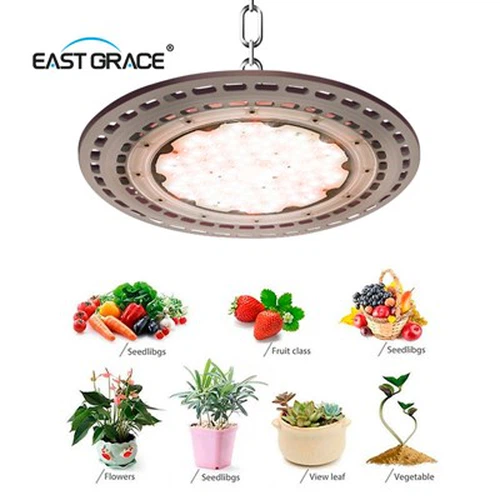
Among the LED grow lights, the UFO-style looks great with its unique shape. Just like the UFO LED lights that are commonly used in commercial and industrial indoor projects, the UFO LED grow lights for indoor gardening are efficient, offering high brightness, low heat, and long lifespan.
HID: High-intensity discharge light supports a complete plant growth cycle and is one of the industry's most reliable grow light types. It's affordable but less energy efficient than LED grow lights. In fact, HID will require replacement each year because it tends to overheat. Because it produces excessive heat, you must install a cooling system to avoid trapping heat within an indoor garden. This will increase your electric bill even more.
CFL: Widely available and easy to set up, CFL grow lights are perfect for beginners. These do not require a lot of energy to work and produce little heat. However, CFLs are best for small to medium spaces because they produce less light. This grow light type cannot support a full cycle growth, and the bulbs require more frequent replacement than HID and LED grow lights.
Factors to Consider When Choosing LED Grow Lights



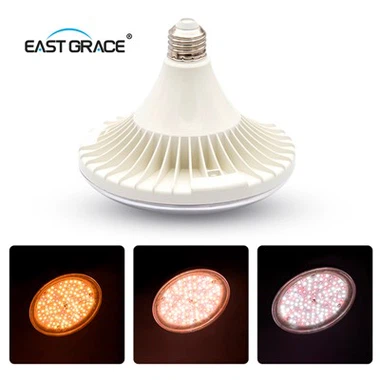
Light Spectrum Needs
Plants love light, but not all light is the same. They need specific types of light to grow strong and healthy. Think of full-spectrum LED grow lights as a mini sun for your plants.
They give off a mix that includes blue, red, and even green lights. The blue light makes your plants have strong leaves, while the red helps them bloom and bear fruit.
Coverage Area
Choosing the right LED grow light means thinking about how much space you need to cover. The coverage area is all about the size of your indoor garden or hydroponic setup. Some lights are made for small spaces, while others can handle bigger areas where lots of plants live together.
You'll want a light that shines over all your plants evenly so they can grow well.
It's smart to check the light's details because they tell you how big an area it can cover at different heights. Make sure your light is strong enough to reach tall plants but not too powerful for tiny seedlings.
Power Consumption and Efficiency
Once you've measured the size of your grow space, it's time to think about how much energy your LED lights will use. LED grow lights shine in this area because they consume less power than other types.
They turn more energy into light and less into heat, which is good for your plants and your pocket.
LEDs are built to last longer, too, so they don't need to be replaced as often as other lights. You won't just cut down on power usage.
Heat Output and Cooling Systems
Moving from power matters to controlling heat, LED grow lights stand out for their cooler operation compared to other types of grow lights. They give off less heat, which means you don't need big, costly cooling systems.
Plants are sensitive to temperature. Some high-tech ones even use water because it's great at soaking up heat without getting too hot itself. Remember, keeping your growing room at the right temperature helps your plants stay happy and healthy while making sure the lights work well for longer!
How Do Plants React to Different Light Colors
UV: PROTECTIVE MEASURES to high light conditions and stimulation of insect repelling chemicals. Enhances pigment accumulation in leaves, affects leaf and plant morphology.
Blue: Signal for lack of neighbors, no need to compete for light. Stimulates stomatal opening, stem elongation inhibition, thicker leaves, orientation to light and photoperiodic flowering.
Green, Yellow, Orange: Signal of neighbors, competition for light. Responses opposite to blue light; stomatal closure, some shade avoidance symptoms, enhanced photosynthesis in deeper cell layers.
Red: Lack of neighbors signal. Main component needed for photosynthesis, stem elongation inhibition, signal light
Far-red: Signal light; Signal of neighbors, competition for light. elongation, flowering.
It is important to consider that different plants react differently to various light treatments (even different strains of the same plant). Additionally, a plant in its flowering phase may require a different light treatment as opposed to when it is in the vegetative stage. When it comes to the light itself, several parameters can be modified:
- Light spectrum (the combination of colors used to produce the light)
- Light intensity (typically measured in micromoles, the amount of photons projected onto the plants)
- Photoperiod (number of hours a plant is exposed to light within a 24 hour period)
- Light uniformity (the degree to which the light is equally distributed across the canopy)
When it comes to choosing your grow light, most people get stuck between a HPS light and an LED grow light.
This is because they're pretty cheap to set up and offer a great light intensity - ultimately leading to bigger and better yields. However, while set up might be less expensive, HPS grow lights require continuous investment as the bulbs only last around 12-18 months. And, as they're more intense and use more power, you'll need to invest in high quality cooling systems and ventilation to keep your grow space the optimum temperature.
LED grow lights on the other hand are a little more expensive to set up but can last much longer. They require much less cooling - ultimately saving you money - and are pretty energy efficient.
Commercial growers are starting to turn to LED lighting to replace their traditional HPS lighting. The yields are still as high but LEDs run with half the power.
How to Use LED Grow Light
Determine the type and size of LED grow light you need based on the size of your indoor garden, the type of plants you are growing, and the growth stage they are in. Consider factors such as wattage, color spectrum, and coverage.
Choose a location for your LED grow light near your plants and easily accessible for maintenance. Make sure the area is well-ventilated and has enough room for light and necessary equipment.
Suspend the LED grow light using an adjustable rope or chain system. Make sure it is securely attached to the ceiling or support structure.
Connect the LED grow light to a power source using the included power cord. Follow the manufacturer's instructions carefully and avoid overloading the circuits.
Set the timer on your LED grow light to provide the appropriate amount of light for your plant's specific needs. For most plants, this will be 12-16 hours a day.
Monitor the light output of your LED grow light regularly and adjust the height and position as needed to avoid burning or stressing your plants.
Choose the right color spectrum
LED grow lights are available in a variety of color spectrums, from warm white to cool white, red and blue. Different plants have different needs at different stages of growth. For example, red light is best for flowering, while blue light is best for vegetative growth. It is important to choose the right color spectrum for the particular plants you are growing.
Determine the appropriate power
The power of your LED grow light will depend on the size of your indoor garden and the type of plants you are growing. Watts will determine the intensity of light that can affect plant growth. Too much light can burn plants, too little light can cause them to yawn.
Consider using multiple lights
If you have a large indoor garden, it can be beneficial to use multiple LED grow lights to provide more even coverage and ensure that all plants receive adequate light. This can also help prevent circuits from being overloaded and provide flexibility to adjust the position of the lights as needed.
Use a light meter
A light meter can help you determine the intensity of light in your indoor garden and ensure your plants receive the appropriate amount of light. This can help you adjust the height and position of the lights and their on times.
Grow lights can be used for a variety of applications, including:
Indoor Gardening: Grow lights are essential for cultivating plants indoors, where natural sunlight may be limited or unavailable.
Greenhouses: Supplemental grow lighting can extend the growing season and improve plant health in greenhouses, particularly during the winter months.
Seed Starting and Cloning: Grow lights provide the necessary warmth and light spectrum for germinating seeds and promoting healthy root development in clones.
Supplemental Lighting: Grow lights can be used outdoors or in partially shaded areas to provide additional light for plants that may not receive adequate sunlight.
Maintaining Your LED grow light
To ensure that your LED grow light remains in good working condition, here are some helpful tips on how to keep it running optimally:
Dust off components regularly. This will help reduce the buildup of dirt and dust which can interfere with the lighting performance.
Replace bulbs when necessary. Most LED bulbs have a life span of around 10-20 years. Replace any bulbs that are beginning to dim or flicker.
Check for loose connections. Make sure all wires and connections are secure to prevent any potential damage or short circuits.
Store unused LED grow lights correctly. Keep them in a dry, cool place away from direct sunlight to prevent premature aging.
By following these simple maintenance tips, you can keep your LED grow light in good working order and get the best results from your grow space.
Troubleshooting problems with your LED grow light is an important part of keeping it in working order.
FAQ
Q: What is the difference between an LED light and an LED grow light?
Q: What does LED grow light do?
Q: Can any LED light be used as a grow light?
Q: What is the difference between a grow light and a regular light?
Q: What are the main types of LED grow lights?
Q: Can LED grow lights really help my indoor plants grow?
Q: Will an LED grow light use up a lot of electricity?
Q: How long do LED grow lights last compared to other plant lighting options?
Q: Are there any special features I should look for in an LED grow light system?
Q: Can any light bulb be used as a grow light?
Q: Are LED grow lights as good as sunlight?
Q: Do LED grow lights need UV?
Q: Can I leave LED grow lights on all night?
Q: How many hours of LED light for plants?
Q: How do I choose an LED grow light?
Q: What is the best grow light for indoor plants?
Q: Can white LED lights grow plants?
Q: Can LED strip lights be used as grow lights?
Q: Are LED grow lights cheap to run?
Q: What is the lifespan of a LED grow light?
As one of the most professional led grow light manufacturers and suppliers in China, we're featured by quality products and good price. Please rest assured to buy cheap led grow light made in China and get free sample from our factory. Contact us for customized service.
indoor gardening light, Slim LED Grow Light Panel, indoor plant lightPopular Products


