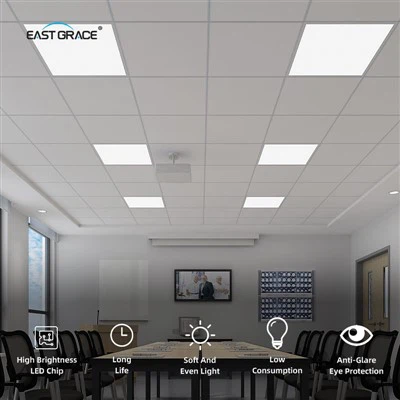
Hey there! As a professional lighting supplier, I often get asked about the power consumption of professional lighting. It's a crucial topic, especially for those looking to balance high - quality illumination with energy efficiency. In this blog, I'll break down the power consumption of different types of professional lighting and how it can impact your bottom line.
Let's start by understanding why power consumption matters. In today's world, energy costs are on the rise, and businesses are constantly looking for ways to cut down on expenses. Professional lighting is no exception. Whether you're lighting up a large commercial space, a greenhouse, or an industrial facility, the amount of power your lights use can significantly affect your monthly electricity bill. Moreover, with the growing emphasis on environmental sustainability, using energy - efficient lighting is not just a cost - saving measure but also a step towards a greener planet.
Types of Professional Lighting and Their Power Consumption
LED Lighting
LED (Light - Emitting Diode) lighting has become the go - to choice for professional applications in recent years, and for good reason. LEDs are incredibly energy - efficient compared to traditional lighting sources like incandescent and fluorescent bulbs.
Take the High-End Antiglare LED Downlight Plus A as an example. These downlights are designed for high - end commercial and residential spaces. They typically consume anywhere from 5 to 20 watts, depending on the specific model and brightness level. In contrast, a traditional incandescent downlight of similar brightness might consume 60 to 100 watts. That's a huge difference!
The energy efficiency of LEDs comes from their ability to convert a higher percentage of electrical energy into light rather than heat. Incandescent bulbs, on the other hand, waste a large amount of energy as heat, which is why they're so inefficient.
Another popular LED product is the AC100~277V T5 Integrated PC LED Tube Light. These tube lights are commonly used in offices, warehouses, and retail stores. They usually consume around 14 to 28 watts, compared to fluorescent tube lights that can consume 32 to 40 watts. This reduction in power consumption not only saves money but also reduces the heat generated in the space, which can lower the load on your air - conditioning system.
HID Lighting
High - Intensity Discharge (HID) lighting includes technologies like metal halide and high - pressure sodium lamps. These are often used in large outdoor areas such as stadiums, parking lots, and industrial yards where high levels of illumination are required.
Metal halide lamps are known for their high color rendering index (CRI), which means they can reproduce colors more accurately. However, they also consume a significant amount of power. A typical metal halide lamp can consume anywhere from 175 to 1000 watts. High - pressure sodium lamps, on the other hand, are more energy - efficient than metal halide lamps but have a lower CRI. They usually consume between 50 and 400 watts.
One of the drawbacks of HID lighting is that it takes some time to reach full brightness when turned on, and they also have a shorter lifespan compared to LEDs. Additionally, the high power consumption means higher energy costs and more heat generation.
Factors Affecting Power Consumption
Brightness
The brightness of a light, measured in lumens, is directly related to its power consumption. Generally, the higher the lumen output, the more power the light will consume. For example, if you need a very bright light for a large area, you'll likely need a higher - wattage bulb. However, with the advancements in LED technology, you can now get high - lumen output with relatively low power consumption.
Usage Time
How long the lights are used also plays a significant role in power consumption. For instance, if you have lights that are on 24/7 in a security area or a 24 - hour business, the cumulative power consumption over time can be substantial. This is where energy - efficient lighting like LEDs really shine. Even a small reduction in wattage can lead to significant savings over a long period.
Dimming
Dimming is a great way to reduce power consumption. Many modern LED lights are dimmable, which allows you to adjust the brightness according to your needs. When you dim an LED light, it uses less power. For example, if you dim an LED downlight from 100% brightness to 50% brightness, it might use only half the power.
Calculating Power Consumption
Calculating the power consumption of your professional lighting is relatively simple. You can use the following formula:
Power Consumption (kWh) = Power (Watts) x Usage Time (Hours) / 1000
Let's say you have ten AC100~277V T5 Integrated PC LED Tube Light that each consume 20 watts, and they are on for 8 hours a day. The daily power consumption would be:
(20 watts x 10 lights x 8 hours) / 1000 = 1.6 kWh
If you want to calculate the monthly power consumption, you can multiply the daily consumption by the number of days in a month. For a 30 - day month, the monthly consumption would be 1.6 kWh x 30 = 48 kWh.


The Role of Accessories in Power Consumption
Some lighting accessories can also affect power consumption. For example, Active Carbon Filter is often used in grow rooms to remove odors. While it's not a lighting component per se, it's usually powered by electricity. If you have a large grow room with multiple filters running continuously, the power consumption of these accessories can add up.
Making the Switch to Energy - Efficient Lighting
If you're still using traditional lighting in your professional space, it's time to consider making the switch to energy - efficient options like LEDs. The initial cost of LED lighting might be higher than traditional bulbs, but the long - term savings in energy costs and replacement costs more than make up for it.
Not only will you save money, but you'll also be doing your part for the environment. LED lighting has a much lower carbon footprint compared to traditional lighting, which is important in today's world where sustainability is a top priority.
Contact Us for Your Lighting Needs
If you're interested in learning more about our professional lighting products and how they can help you save on power consumption, we'd love to hear from you. Whether you're a business owner looking to upgrade your office lighting or a grower in need of the right lighting for your plants, we have a wide range of products to suit your needs.
Get in touch with us to start a conversation about your lighting requirements. We can provide you with detailed information on power consumption, pricing, and installation. Let's work together to create a well - lit, energy - efficient space.
References
- "LED Lighting Technology Handbook"
- "High - Intensity Discharge Lighting: Principles and Applications"
- Industry reports on lighting energy efficiency