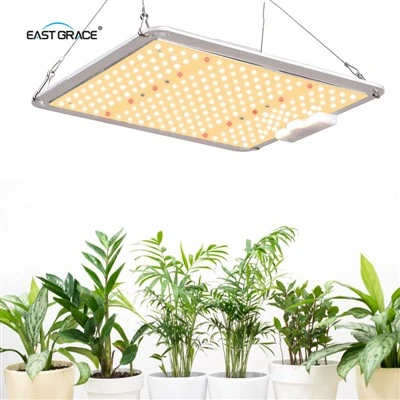
In modern plant lighting manufacturing, optical simulation software (such as TracePro, LightTools, and Zemax) has become an indispensable design tool. Engineers use these platforms to model light propagation, including ray tracing, intensity distribution, and uniformity on a target plane, long before any physical prototype is built. This digital approach dramatically reduces trial‑and‑error costs and shortens development cycles. For instance, simulations can predict how light spreads from each LED through secondary optics, accounting for reflection, refraction, and even scattering caused by dust or condensation – factors that are critical for reliable greenhouse performance.
Going beyond generic simulations, leading manufacturers now provide end‑to‑end customization services that start with deep customer consultations. They collaborate closely with growers to define core spectrum requirements – for example, a high red‑to‑blue ratio for fruiting crops like tomatoes, or a balanced spectrum with added far‑red for leafy greens to accelerate canopy closure. Then, they perform detailed optical simulations that consider fixture spacing, mounting height, and greenhouse geometry. A practical case: a strawberry grower needed a uniform photosynthetic photon flux density (PPFD) of 300 µmol/m²/s over a 2‑meter‑wide bed at a 40‑cm working distance. Simulation helped determine the optimal lens angle (60°) and the number of LEDs per light bar to achieve that target with minimal overlap loss, while also evaluating stray light that could waste energy outside the bed area.
After the simulation validates the optical design, the manufacturer handles full system integration – matching the driver output, fine‑tuning thermal management, and even suggesting control algorithms for dimming. This holistic approach ensures that every component works harmoniously. In one documented project, a vertical farm operator reduced energy consumption by 15% and improved yield consistency by 20% after switching to a custom‑designed fixture that used simulation‑optimized microlens arrays to eliminate hotspots and edge shading. Ultimately, these tailored solutions empower growers to maximize photosynthetic efficiency and crop quality, adapting precisely to their unique growing environment, crop species, and even seasonal variations – all made possible by the predictive power of optical simulation.