


Description
Send Inquiry
Interlighting Plant LED Grow Light
Product Introduction
| In a modern commercial grow room, overhead lighting is no longer the only variable. As facilities move toward higher planting densities, multi-tier vertical racking, and tall indeterminate crops, the limits of top-down lighting become visible. Overhead fixtures deliver photons to the canopy surface, but a significant share of those photons never reach the mid-canopy or lower leaves. The upper leaves intercept light first, and the lower canopy exists in a shadow zone that contributes little to whole-plant photosynthesis. This is not a marginal issue. In dense crops, the lower half of the plant can represent 40–50% of total leaf area but receive only a fraction of the PPFD measured at the canopy top. The result is a vertical photosynthesis gradient: the top of the plant produces, the bottom of the plant consumes. Yield potential, crop uniformity, and quality consistency all suffer. Interlighting solves this by delivering light where overhead fixtures cannot reach-inside the canopy, between the rows, and between tiers. By placing linear LED fixtures at mid-canopy height or between vertical layers, interlighting raises the photosynthetic contribution of lower leaves, evens out the vertical PPFD profile, and turns previously shaded leaf area into productive growing surface. The Interlighting Plant LED Grow Light is engineered for this exact role. It is a slim, double-sided linear fixture designed to hang between plant rows, under trellis systems, or between vertical racking tiers. With a 240° wide beam angle, dual-side light emission, and a high-efficiency PPE platform up to 2.7 µmol/J, it extends the productive light zone into the inner canopy without shadowing the crop or disrupting overhead light distribution. |
Products Description
| Product Name | Interlighting Plant LED Grow Light | ||
| Model | EG-IP15DGL-50A | EG-IP15DGL-50B | EG-IP15DGL-50C |
| Product Picture | 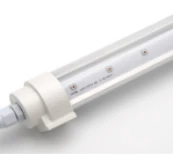 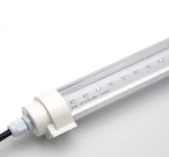 |
||
| Product Size(mm) | L1500*D38 | ||
| Wattage(W) | 50 | ||
| LED Qty | 400 | 200 | 84 |
| Spectrum | 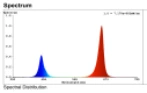 |
||
| LED Light Source | 450nm; 660nm; | ||
| LED Brand | SANAN 2835 | SANAN 2835 Lens | SANAN 3535 Lens |
| Product Materials | Full PC+Aluminum Heatsink Inside | ||
| PPFD@0.3m(umols/s/m2) | ~140 | ~180 | ~240 |
| PPE(umol/J) | ~2.0 | ~2.2 | ~2.7 |
| Power Factor(PF) | >0.95 | ||
| Flicker or Flicker Free | Flicker Free | ||
| Input voltage(V)/ Frequency(Hz) |
AC100~265V 50/60Hz | ||
| Dimming | Not Dimmable | ||
| View Angle | 240º | ||
| IP Rating | IP65 | ||
| Color Rendering Index(Ra) | CRI>80 | ||
| Operating Temperature(℃) | -15~40 | ||
| Warranty | 3 Years | ||
| Feature | 1. Customized Spectrum Available 2. Double-side Light up 3. Daisy-Chain Connecting: Series connection; Plug&Play |
||
Performance Comparison
| For commercial growers evaluating whether to add interlighting to an existing overhead system, the comparison is not about replacing overhead fixtures-it is about measuring what the canopy actually receives at different depths. The table below illustrates the operational logic of interlighting in a representative dense-canopy scenario. |
| Performance Metric | Overhead-Only Lighting | Overhead + Interlighting (Model C) |
| Canopy Surface PPFD | 800–1000 µmol/s/m² | 800–1000 µmol/s/m² (unchanged) |
| Mid-Canopy PPFD | 200–350 µmol/s/m² (60–75% attenuation) | 450–600 µmol/s/m² (improved by 80–100%) |
| Lower Canopy PPFD | 80–150 µmol/s/m² (85–90% attenuation) | 250–350 µmol/s/m² (improved by 150–200%) |
| Whole-Plant Photosynthetic Rate | Baseline | +20–35% (crop-dependent) |
| Vertical PPFD Uniformity | <0.40 (top vs. bottom) | >0.65 (top vs. bottom) |
| Fixture Count for Same Canopy Coverage | Higher overhead density required | Fewer overhead fixtures needed when interlighting is deployed |
| Heat Load at Canopy Surface | Concentrated at top of canopy | Distributed vertically; reduced top-canopy heat stress |
| Installation Complexity | Overhead suspension only | Overhead suspension + between-row/tier mounting |
| Retrofit Compatibility | - | Compatible with existing overhead systems; daisy-chain plug-and-play |
| The operational takeaway is straightforward: interlighting does not replace overhead lighting-it extends the productive volume of the canopy. For vertical farms, multi-tier racks, and tall greenhouse row crops, that extension is the difference between lighting a surface and lighting a plant. |
Core Technology & Engineering Design
| 1. Double-Sided Emission Architecture for In-Canopy Application The defining feature of this fixture is its dual-side light output. Unlike conventional single-sided bars that emit in one direction, this fixture is designed to illuminate the plants on both sides of its mounting position simultaneously. In row crops, a single bar suspended between two rows serves both rows. In vertical racks, a bar mounted between tiers delivers side light to the canopy above and below. In propagation benches, the bar can supplement light to trays on either side. This architecture reduces fixture count, simplifies wiring, and lowers installation labor compared to deploying two single-sided bars in the same position. It also produces a more symmetrical light distribution around the fixture, which is important for crops that respond to light direction and canopy symmetry. Full PC Housing with Internal Aluminum Heatsink: The housing is constructed from full PC with an integrated aluminum heatsink inside. The sealed PC exterior is corrosion-resistant and suitable for humid grow rooms, while the internal aluminum structure conducts heat away from the LEDs to maintain stable junction temperatures over long photoperiods. 240° Wide Beam Angle: The extremely wide viewing angle distributes light broadly from both faces of the fixture, reaching leaves at multiple angles and depths within the canopy. This reduces the "light tunnel" effect common with narrow-beam fixtures and promotes more even vertical growth. Slim L1500 × D38mm Profile: The narrow diameter allows the fixture to be placed close to plant stems without physically interfering with the crop. In vertical racks, the slim profile minimizes the vertical space occupied by each lighting layer, maximizing the number of productive tiers within a given building height. 2. High-Efficiency LED Platform Across Three Models The series offers three models with different LED packages and efficiency levels, allowing the fixture to be specified to the project's target PPFD and budget. Model A (EG-IP15DGL-50A): SANAN 2835 LEDs, 400 diodes, PPE ~2.0 µmol/J, PPFD ~140 µmol/s/m² at 0.3m. This model is positioned for cost-sensitive installations where a higher fixture count can compensate for lower per-fixture output. Model B (EG-IP15DGL-50B): SANAN 2835 Lens LEDs, 200 diodes, PPE ~2.2 µmol/J, PPFD ~180 µmol/s/m² at 0.3m. This is the balanced general-purpose model for most interlighting applications. Model C (EG-IP15DGL-50C): SANAN 3535 Lens LEDs, 84 diodes, PPE ~2.7 µmol/J, PPFD ~240 µmol/s/m² at 0.3m. This model delivers the highest efficiency and output per fixture, matching premium overhead commercial fixtures and suitable for projects with limited power capacity or limited mounting positions. All three models share the same mechanical platform, electrical input, IP65 rating, and installation method. This means a facility can standardize on one fixture family while selecting different models for different zones or project phases-simplifying maintenance and spares while still matching the light recipe to the crop. 3. Crop-Tailored Spectrum: 450nm Blue + 660nm Red as the Baseline The standard spectrum combines 450nm deep blue and 660nm deep red-the two wavebands most directly tied to chlorophyll absorption and photosynthetic drive. 450nm Deep Blue: Regulates stomatal opening and drives chlorophyll synthesis, supporting strong vegetative growth, compact plant architecture, and leafy crop development. 660nm Deep Red: Delivers peak photosynthetic response (McCree curve maximum) to drive biomass accumulation, flowering initiation, and fruit development-directly impacting final yield and crop quality. Custom Spectrum Available: For commercial orders, the spectrum can be tuned for specific crop responses-adjusting red-to-blue ratios for compactness versus stretch, or adding specific wavelengths for targeted quality traits. Because the spectrum is customizable, the fixture can be specified to match the crop plan rather than forcing the crop to adapt to a fixed off-the-shelf spectrum. 4. IP65 Sealed Environmental Protection Rated IP65 per IEC 60529 standards, the fixture is completely dust-tight and protected against low-pressure water jets from all directions. This is particularly important for interlighting fixtures, which operate in close proximity to plants, irrigation lines, and humid microclimates. Withstands daily overhead irrigation, misting systems, and periodic facility washdowns without internal corrosion or electrical failure. Sealed driver compartment and cable glands prevent moisture ingress in high-humidity greenhouse environments. Corrosion-resistant PC housing and internal aluminum chassis suitable for long-term use in humid, fertilizer-laden greenhouse atmospheres. 5. Daisy-Chain Plug-and-Play Installation The fixture supports series connection via waterproof locking connectors, allowing multiple bars to be linked from a single power feed. This simplifies wiring in long rows and multi-tier layouts, reduces installation labor, and keeps cable management clean. The plug-and-play design allows fixtures to be added or reconfigured as the crop plan changes-an important operational advantage in facilities that rotate crops or reconfigure zones between seasons. |
Engineering Installation & Layout Guide
| Mounting Methods Between-Row Suspension (Greenhouse Row Crops): Hang horizontally between plant rows using steel wire ropes and adjustable hangers. Position at mid-canopy height so the fixture emits light to the leaves on both sides. Adjust height as the canopy develops. Between-Tier Mounting (Vertical Farms): Mount vertically or horizontally between racking tiers to deliver side light to the lower canopy layers. The slim profile minimizes interference with tier spacing. Propagation Bench Mounting: Suspend above or between propagation trays to supplement light to seedlings and cuttings. The double-sided emission helps reach tray edges and lower leaves. Fixed Bracket Mount: Bolt directly to rack structures or bench frames for permanent installations where height adjustment is not required. Daisy-Chain Connection Guidelines Use waterproof locking connectors to maintain IP65 rating across the connection. Confirm total connected load against the power supply or controller rating before linking multiple fixtures. Keep cable runs within recommended lengths to avoid voltage drop and ensure stable operation. All connections should be inspected periodically for seal integrity, especially in washdown environments. |
| Recommended Mounting Height & Coverage | |||
| Model | Recommended Mounting Height | Best Application | Typical Spacing |
| Model A (50A) | 0.2–0.4m from leaf surface | Cost-sensitive installations; propagation benches | 20–30cm between fixtures |
| Model B (50B) | 0.25–0.45m from leaf surface | General interlighting; greenhouse rows | 25–35cm between fixtures |
| Model C (50C) | 0.3–0.5m from leaf surface | High-efficiency zones; premium crops | 30–40cm between fixtures |
| Note: These are starting points. Final spacing and height should be set from the target PPFD at the leaf surface, the crop sensitivity, and the measured uniformity in the actual installation geometry. |
|||
| Crop-Specific PPFD Targets (Supplemental Interlighting) |
||
| Crop Type | Target Supplemental PPFD | Recommended Model |
| Leafy Greens / Herbs (propagation) | 100–200 µmol/s/m² | Model A (higher fixture count) |
| Strawberries / Soft Fruit (inner canopy) | 150–250 µmol/s/m² | Model B |
| Tomatoes / Cucumbers (mid-lower canopy) | 200–350 µmol/s/m² | Model B or C |
| High-Value Fruiting Crops (vertical racks) | 250–400 µmol/s/m² | Model C |
Primary Commercial Applicationstion
| Vertical Farms & Multi-Tier Racking: Interlighting bars placed between tiers deliver light to lower leaves and inner canopy layers, improving whole-plant photosynthesis and reducing the difference in growth between top and bottom tiers. Greenhouse Row Crops: For tall crops such as tomatoes, cucumbers, and peppers, interlighting fixtures suspended between rows deliver light to the mid and lower canopy-areas that are often shaded by upper leaves. This can improve fruit set, reduce abortion, and improve uniformity of ripening. Propagation & Young Plant Production: In dense propagation trays, seedlings and cuttings compete for light. Side-emitting interlighting bars provide supplemental light to the lower canopy and edges of the tray, promoting more uniform establishment and reducing stretch. Controlled Environment Agriculture (CEA) Facilities: Multi-room and multi-layer facilities can use interlighting to increase total light delivery without adding overhead fixtures, or to extend photoperiod in specific zones without increasing top-lighting intensity. Retrofit Projects: Existing overhead lighting systems can be supplemented with interlighting to raise whole-plant photosynthesis without replacing the primary fixtures. |
Total Cost of Ownership & ROI Analysis
| Model C vs. Overhead-Only Baseline: 5-Year Comparative Analysis Calculated at 16 hours daily operation, 365 days/year, $0.12/kWh commercial electricity, and assuming interlighting raises whole-plant photosynthesis by 20–30% in a representative dense-canopy crop. |
||
| Cost Category | Overhead-Only Baseline | Overhead + Interlighting (Model C) |
| Upfront Interlighting Cost | - | $85–$110 per fixture |
| Annual Energy Cost (per fixture) | - | ~$35 |
| Annual Yield Value Increase (per fixture) | - | $90–$150 (crop-dependent) |
| Annual Net Benefit (per fixture) | - | +$55–$115 |
| Simple Payback Period | - | ~8–12 months |
| 5-Year Net Benefit (per 100 fixtures) | - | $27,500–$57,500 |
| Additional operational benefits include reduced vertical growth disparity, more uniform ripening, improved color development in lower canopy layers, and better utilization of existing overhead lighting investment. For facilities already operating overhead LED systems, interlighting is the lowest-cost way to increase total photon delivery without expanding the primary lighting footprint. |
||
Quality Assurance, Certifications & Warranty
| Production & QC Workflow Each fixture undergoes a controlled production process: Incoming material inspection: LED chips, PC housing, and aluminum heatsink tested for wavelength, electrical performance, and dimensional accuracy. Automated assembly with precision inspection for reliable long-term connections. Aging test at elevated ambient temperature to screen for early component failures. Photometric testing: PPFD, PPE, spectrum, and power factor verified for each production batch. IP65 water-jet and dust testing on sample units per IEC 60529 standards. Final visual inspection, functional test, and secure export packaging. Certifications & Warranty CE (LVD + EMC Directives) RoHS 2.0 Compliance IP65 Tested per IEC 60529 3-year limited warranty covering defects in materials and workmanship Warranty includes performance coverage for lumen maintenance within the warranty period Excludes damage from improper installation, overvoltage, water immersion, unauthorized modification, or operation outside rated environmental conditions |
Wholesale, OEM & Project Services
| Wholesale & Distribution: Tiered volume pricing, neutral export packaging, and drop-shipping support for distributors and agricultural supply partners. Commercial Project Support: Layout planning, PPFD simulation, DLI calculation, and retrofit design services for greenhouse and CEA projects. Customization Options: Custom spectrum tuning, private label branding, and custom packaging (MOQ applies). Control System Integration: Interlighting can be integrated with overhead lighting controllers for unified photoperiod and zone management. |
Frequently Asked Questions
| Q: Is this a replacement for overhead grow lights? A: No. It is a supplemental interlighting fixture designed to deliver light to the inner canopy and lower leaves that overhead fixtures cannot reach. It works alongside overhead lighting, not in place of it. Q: How many fixtures do I need for my facility? A: Fixture count depends on canopy volume, target PPFD at the leaf surface, and the model selected. Contact our technical team with your facility dimensions and crop details for a layout recommendation. Q: Can the fixtures be used in greenhouse environments with overhead irrigation? A: Yes. The IP65 rating means the fixtures are fully dust-tight and resistant to water jets from any direction. They are designed to operate reliably under overhead sprinklers, misting systems, and during regular facility washdowns. Q: Is the fixture dimmable? A: No, this model is not dimmable. Output is fixed at the rated wattage. For dimmable options, please inquire about other product families. Q: What is the difference between Model A, B, and C? A: The models differ in LED package, LED count, PPFD output, and PPE. Model C uses SANAN 3535 lenses for the highest PPE and PPFD; Model A uses SANAN 2835 for cost-sensitive projects; Model B balances both. Q: Do you offer custom spectrum options for specific crops? A: Yes, customized spectrum is available for commercial orders. Contact our technical team with your crop and target response requirements. |
Request a Project Quote
| For commercial quotations, interlighting layout assessments, custom spectrum requests, or large-order pricing, send us an inquiry with your required model, quantity, facility type, and crop details. Our horticultural lighting engineers will respond with a detailed project proposal and ROI analysis within 24 business hours. |
Hot Tags: full pc interlighting plant led grow light, China full pc interlighting plant led grow light manufacturers, suppliers, factory, plant grow light bulb, other allies, other managers, other tasks, other projects, other views
