East Graces has been involved in LED development since 2008, obtain the IEC 62471 of LED product safety in 2016. We are a professional producer at led modules, power supplies and different kinds of component for electronic and lights. Concentrated in LED core area expansion, Plant Light to improve agricultural industry efficiently furthermore.
Why Choose Us
Our Factory
East Graces has been involved in LED development since 2008, obtain the IEC 62471 of LED product safety in 2016. We are a professional producer at led modules, power supplies and different kinds of component for electronic and lights.
Our Product
We provide vary of lights, such as tubes, tri-proof lights, mosquito-killer lamp, and Ambient Light etc. Tubes and grow light are especially popular in the market.
Professional Team
East Graces continuing to provide excellency products and earn multiple innovation and patents, thanks to the specialized development team with advanced technology and high-performance automatic equipment endeavor.
Our Service
Providing technical consultant service, design and customize for free. Pleasing to visit the production procedure, inspection facilities and quality management system. Follow up producing schedule, quality monitoring and offer goods examine.

Interlighting Plant LED Grow Light
EG-IP12DGL-50C has two sides LEDS with 360°lighting emit, which can ensure the maximum illumination area and light up all surrounding plants. External driver for easy maintenance and heat dissipation. Vertical mounting with daisy-chain solution to make it ideal for grow tower application.

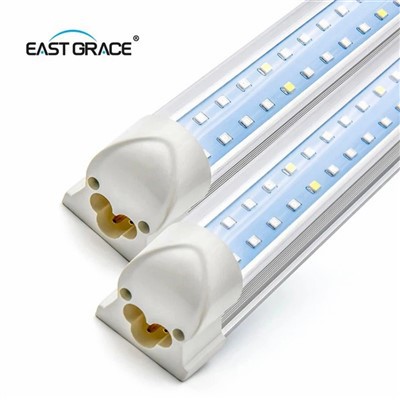
T8 Integrated LED Tube Grow Light
The EG-I8PATG-150 LED Grow Light specializes in indoor plant growth. The grow lights combine the full spectrum of blue and red lights for all stages of plant growth.

T8 Integrated LED Tube Grow Light2
EG-WI8PATG-150 full spectrum led grow light tube provides indoor plants with full-spectrum sunlight replacement at 385nm-730nm. It provides the most optimal growth light wave based on the ratio of the absorption of the plants. It is suitable for plant shelves, hydroponics growing rooms, and greenhouses.

Foldable LED Grow Light Bar Module
This powerful lamp offers a full spectrum of light in a 720 watt, L1100*W1060*H45 mm design, giving you efficient light with 50000 hours lifespan. In addition, the EG-FBMGL-720C-IN produces 1350 Umol/s PPF output and 2.4 Umol/J PAR luminous efficacy.

DC Strip LED Grow Light housing is made of high-quality aluminum with good heat dissipation, which is perfect for shelves, germination, seed starting, fruiting, flowering, hydroponics, and potted plants.

UFO LED High Bay Grow Light Fixture
EG-UHBGL-250 LED grow light has excellent lumen output, long-lasting stability, and brilliant vision. UFO LED high bay light fixture equipped with a 0-10V dimmable driver. An aluminum die-cast heat sink provides optimal heat dissipation and long-span life.

The EG-CTGL-20 Full Spectrum Grow Light is design for indoor garden plants specifically. This sunlight-grown light can promote the photosynthesis of plants. Widely apply to the culture solution, horticulture, and potted plant, especially when the plant needs extra light when raining, snowing, dark indoors, etc.

EG-RUBLGC-30 full spectrum led plant light bulb provides the most efficient wavelength of light for maximum absorption by plants, lower heat, no radiation, and mercury. EG-RUBLGC-30 led grow light has a smaller and lighter design. It has a variety of light required for growing seedlings, dragon fruit, strawberries, succulents, and other plants.

The EG-RUBLGB-50 is a high-performance lighting system designed to meet every stage of plant growth. The EG one will ensure healthy seeds and leaves, leading great start to the future. It will also promote the flowering and fruiting rates while guaranteeing the quality and giving you a prosperous harvest, ideal for flowering and non-flowering plant species.
What Is Ufo Led High Bay Grow Light Fixture
LED high bay fixtures illuminate a large area with a high ceiling. There are two main categories; high and low bay light. The primary characteristic used to tell them apart is the ceiling height. Normally high bay light means the installation height is over 12 feet. And its wattage is over 100W (10000lm), that's why it's called LED high bay light. While high Bay LED lights create powerful illumination at long distances to improve visibility and focus light more directly than traditional incandescent fixtures. Then high bay lighting fixtures are suspended from the ceiling by hooks, chains, or pendants, or they can be fixed directly to the ceiling (similar to troffer lamps) to provide lighting for these applications.
Advantages of UFO LED High Bay Grow Light Fixture
Energy saving
LED fixtures use less energy to create the same lumens as traditional fixtures. That means you'll spend less money on your electricity bill when you choose LEDs versus metal halide or fluorescent lights. In addition to reducing electricity bills by 80%, LEDs combined with smart sensors can save even more money.
Different lighting distributions
With well-designed optics and layout of LED light, we can get better light uniformity which decreases the usage of the LED light. And we can also get good illuminance and a comfortable visual experience.
Long Life Span
LEDs last 10 times longer than traditional lights like HID metal halide and fluorescent lamps. The average lifespan of an LED is 100,000 hours. With LEDs the need to replace lamps is less frequent, so maintenance costs are reduced.
Durability
With IP66 and IK10, LED High Bay Light Fixtures do not break easily and are virtually unbreakable.
Non-Toxicity
LEDs are currently not considered toxic and can be disposed of in regular landfills which is eco-friendly.
There are many features to consider when choosing high bay lights for growing. First, you must decide what you want to grow. After deciding what you want to grow, you also need to consider the following factors before purchasing.
Grow Light Effect
Grow light efficacy, also known as photosynthetic photon efficacy or PPE, is the output of PAR (photosynthetically active radiance) photons divided by the wattage of the fixture. Grow light efficacy has quickly become one of the primary metrics used by buyers to evaluate products.
The higher the PPE, the more effective it is at reducing electricity consumption, however, this metric has its limitations. For example, PPE only considers photons in the PAR spectrum (excluding wavelengths such as far-red light).
Some buyers will use the photosynthetic photon efficacy as the only reference indicator for purchasing a luminaire, but we don't recommend doing so.PPE does not include spectral effects and is not representative of the quality of the luminaire. In practice, both of these aspects are far more important than the power consumption that PPE represents.
Heat output of grow lights
Previously, there was a claim that grow lights do not produce heat. While they are much more efficient than traditional HPS grow lights, this is not the case.
In general, we recommend not worrying about the difference in heat output between fixtures. But you have to consider the pros and cons of having less heat.
In colder climates, some greenhouse owners find the heat given off by HPS lights more beneficial. This heat does have some benefits, but the lamps are not a reliable source of heat because the heat is difficult to control.HPS grow lights generate heat in various areas throughout the greenhouse, affecting plant growth in an uncontrolled way.
Controlling the heat well can reach a better quality product, and grow lights are the best option, but if you are in a cold climate and want to take advantage of the extra heat produced by the fixtures, regardless of other negative effects, then you may need to look into more traditional plant grow light technology.
Easy to install
High bay lights for growing are mounted above the plant canopy and depending on the distance of your shed roof from the plants, you need to make sure that the grow lights can be easily installed and replaced.
In greenhouses, most grow lights are mounted on struts that run across the top of the facility. In indoor grow rooms, they are usually attached to the pillars using hangers, pulleys, or attached to vertical plant stands.
It's usually smart to know the manufacturer's installation process before you buy. A good manufacturer is also bound to have a well thought out system that is easy to install, replace and expand.
Applications of UFO LED High Bay Grow Light Fixture
Indoor Gardening
LED lights are a boon for indoor gardening enthusiasts, enabling them to cultivate a wide range of plants, from herbs and vegetables to ornamental flowers, inside their homes.

Commercial Agriculture
LED lights in large-scale agriculture are gaining traction, especially in regions with limited sunlight or extreme weather conditions. These lights allow for year-round crop cultivation and higher yields.

Research and Scientific Studies
LED lights play a pivotal role in research settings, where scientists can manipulate light conditions to study plant responses, optimize growth, and develop new agricultural techniques.
LED High Bay Grow Light Fixture Distance Essentials
Factors Affecting Light Distance
Mastering the art of light distance management involves considering several key factors:
Light Intensity: Light intensity decreases as the distance from the source increases. Finding the right balance is crucial to prevent light burn or insufficient light exposure.
Plant Growth Stage: Different growth stages demand varying light intensities. Seedlings require gentler light while flowering plants need more intense illumination.
Specific Plant Species: Different plant species have varying light requirements. Some plants thrive with higher light levels, while others prefer milder illumination.
The Importance of the Right Distance
Proper light-distance management is a fundamental aspect of successful indoor gardening. Incorrect distances can lead to a range of issues:
Light Burn: Placing plants too close to the light source can result in a light burn, causing plant stress and hindering growth.
Stunted Growth: Inadequate light exposure due to improper distances can lead to stunted growth and leggy plants.
Reduced Yield: Plants that don't receive the right light may produce fewer flowers or fruits, ultimately impacting the yield.
Light Bleaching: Excessive light intensity can lead to light bleaching, where leaves lose their vibrant color and vitality.
At various growth stages
Growth Stage: Distance from Plants
Germination: 24 - 36 inches
Seedling: 18 - 24 inches
Vegetative: 12 - 18 inches
Pre-flowering: 8 - 12 inches
Flowering: 6 - 10 inches
Fruiting: 6 - 12 inches
Tips for Effective Distance Management
Achieving the perfect light distance involves a combination of science and observation.
Use a Light Meter: Invest in a light meter to accurately measure light intensity and make informed adjustments.
Adjust Height as Plants Grow: As your plants grow taller, adjust the light height to maintain the optimal distance.
Regularly Monitor Plant Health: Keep a close eye on your plants' overall health and growth. Any signs of stress or inadequate lighting should prompt you to reevaluate the light distance.
Key Features to Consider of LED Grow Light
Light Spectrum
Look for full-spectrum LED grow lights that provide a balanced combination of red, blue, and green light and UV and IR wavelengths. This ensures comprehensive coverage for all growth stages of your plants.
Wattage and Coverage
Consider the wattage and coverage area of the LED grow light. Determine the size of your growing space and select a light that can sufficiently cover the entire area for optimal light distribution.
Dimming and Programmable Settings
Advanced full-spectrum LED grow lights offer dimming and programmable settings, allowing growers to simulate sunrise and sunset, adjust light intensity, and create customized lighting schedules to mimic different seasons.
Cooling Mechanism
Opt for LED grow lights with built-in cooling systems or heat sinks to dissipate heat effectively. Efficient cooling ensures the longevity of the light and prevents heat stress on plants.
These lights are the most effective way to provide your plants with the light they need to grow and thrive, especially if you have no or limited access to natural sunlight.
Blue and red LED grow lights: The secret to healthy and abundant plants
Blue LED Grow Lights
Blue LED grow lights have a wavelength of around 400-500 nm, which is on the shorter end of the light spectrum. This makes them ideal for promoting vegetative growth in plants. They are especially effective for leafy green vegetables, herbs, and young seedlings.
One of the main benefits of using blue LED grow lights is that they help plants develop strong stems and healthy leaves. This is because blue light stimulates the production of chlorophyll, which is essential for photosynthesis.
Blue light also helps to regulate plant growth hormones, such as auxin and gibberellin. These hormones are responsible for the overall growth and development of the plant, including the length and width of stems and leaves.
Red LED Grow Lights
Red LED grow lights have a wavelength of around 600-700 nm, which is on the longer end of the light spectrum. This makes them ideal for promoting flowering and fruiting in plants. They are especially effective for tomatoes, peppers, and other fruiting vegetables.
One of the main benefits of using red LED grow lights is that they promote the production of essential oils and antioxidants in plants. This is because red light triggers the production of phytochromes, which are responsible for regulating a plant's circadian rhythm.
Red light also promotes the development of flower buds, which leads to more fruits and flowers. This is because red light triggers the production of a hormone called florigen, which is essential for flowering.
Combining Blue and Red LED Grow Lights
Using a combination of blue and red LED grow lights is often the best option for indoor gardening. This is because plants need both types of light to grow and develop properly.
Combining blue and red light provides a full spectrum of light that is similar to natural sunlight. This promotes overall plant health and growth, including strong stems, healthy leaves, and abundant fruits and flowers.
The Production Process of LED Grow Light
Making semiconductor wafers
Crystalline semiconductors are grown in a high temperature, high-pressure chamber with a mixture of gallium, arsenic, and/or phosphor. After the solution has been heated and compressed, it is lifted out of the chamber forming a long crystal boule.
Next, the boule is sliced into very thin wafers of semiconductors. The waters are then polished to prepare them to be adhered to additional wafer layers.
Before adding more layers, the wafers are cleaned thoroughly with chemicals and an ultrasonic process. The cleaner the wafers are, the better the LED light will perform.
Adding epitaxial layers
Additional layers of semiconductor crystals are grown on the wafer. During this stage, impurities or dopants can be added to the wafers. The crystal layers are grown this time through a process called Liquid Phase Epitaxy (LPE). During this process, layers that have the same composition as the first layer that was grown are deposited on the wafer.
LPE creates layers that are uniform, making it the preferred method for adding layers.
Additional dopants are added if needed to alter the color or efficiency of the LED.
Adding metal contacts
The metal contact patterns are then defined on the wafer and prepared for the contact metal.
The contact metal is evaporated onto the pattern in a high temperature, vacuum sealed chamber. The metal is heated to temperatures that cause it to vaporize. It then condenses onto the wafer.
To create a single 2 inch-diameter wafer, the metal contact pattern will be repeated up to 6000 times. The diodes are then cut apart either by cleaving or by sawing with a diamond saw.
Mounting and packaging
The diodes are then mounted in the appropriate setting. Two tiny wire leads are connected to the diode and pressed down on the contact metal.
The entire assembly is then encased in protective plastic.
FAQ
Q: What is a high bay grow light?
Q: What is a high bay light fixture?
Q: Can any LED light be used as a grow light?
Q: Should grow lights be turned off at night?
Q: How many hours should grow lights be on?
Q: Should I leave grow lights on all the time?
Q: Can a UV light be used as a grow light?
Q: Do grow lights help in winter?
Q: Do I need a grow light for indoor plants?
Q: Do grow lights increase humidity?
Q: What color grow light is best?
Q: How many watts should a grow light be?
Q: Do grow lamps get hot?
Q: Where to place grow lights?
Q: Do grow lights heat a greenhouse?
Q: When to use red or blue grow lights?
Q: Do you need grow lights in a greenhouse in winter?
Q: What temperature should LED grow lights be?
Q: What color helps plants grow faster?
Q: What is the proper distance for LED grow light?
Hot Tags: ufo led high bay grow light fixture, China ufo led high bay grow light fixture manufacturers, suppliers, factory, led lights for urban hydroponic plants, grow light for sage, plant growth leds for balcony vertical farming, led lighting for plants, Greenhouse Farm T8 Led Tube, hydroponic plant growth light