1. What Is Wattage in LED Grow Lights?
Wattage (W) refers to the electrical power consumed by an LED grow light during operation.
For example, an 800W LED grow light generally consumes more electricity than a 400W model under comparable operating conditions.
Wattage helps buyers estimate electricity consumption and plan their lighting systems. However, it does not directly indicate how much usable light a fixture produces for plant growth.
2. What Is PPE in LED Grow Lights?
PPE stands for Photosynthetic Photon Efficacy. It measures how efficiently an LED grow light converts electrical energy into photosynthetic photons.
PPE is expressed in micromoles per joule (μmol/J).
In general, a higher PPE value means the fixture produces more photosynthetic photons for each joule of electricity consumed.
For commercial growing projects, PPE is an important specification when comparing the energy efficiency of different LED grow lights.
3. Why Should Buyers Consider Both PPE and Wattage?
Wattage and PPE should be evaluated together rather than separately.
When comparing LED grow lights, buyers should consider:
- Power consumption: How much electricity does the fixture use?
- PPE: How efficiently does it convert electrical energy into photosynthetic photons?
- PPF: How many photosynthetic photons does the fixture produce per second?
- Light distribution: Does the light cover the growing area effectively?
- Installation requirements: Is the fixture suitable for the greenhouse or indoor growing environment?
It is also important to compare specifications measured under consistent testing conditions. Actual growing results depend on fixture placement, crop type, lighting duration, and other environmental factors.
4. Choose LED Grow Lights for Your Application
Different growing environments require different lighting solutions.
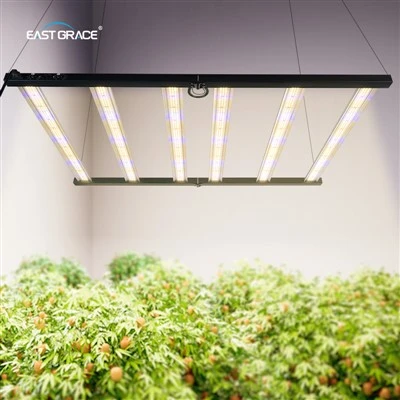
For example, commercial greenhouses may use high-power LED top lights, while indoor vertical farms may prefer linear LED grow lights installed above growing racks.
Under-canopy and inter-canopy lighting can also be used to provide supplemental light to selected areas within dense crop canopies.
Choosing the right fixture means balancing power, PPE, light output, coverage, and installation conditions.
5. Work with a Professional LED Grow Light Manufacturer
As a professional LED grow light manufacturer, we provide lighting solutions for greenhouse cultivation, indoor farming, and commercial growing projects.
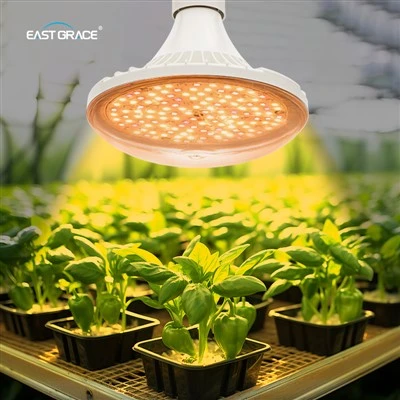
Our product range includes LED top lights, octopus grow lights, T8 LED grow tubes, inter-canopy lights, and under-canopy supplemental lights.
We also support wholesale supply and OEM/ODM customization to meet different market and project requirements.
Looking for efficient LED grow lights for your business? Contact us for product specifications, technical details, and wholesale quotations.
Conclusion
Wattage tells buyers how much electrical power an LED grow light consumes, while PPE indicates how efficiently it converts electricity into photosynthetic photons.
By evaluating both specifications alongside PPF, light distribution, and application requirements, buyers can make more informed decisions when selecting LED grow lights.