1. What Is Light Uniformity in Grow Lighting?
Light uniformity describes how evenly photosynthetic light is distributed across a target growing surface.
For LED grow lights, this is commonly evaluated by measuring PPFD (Photosynthetic Photon Flux Density) at multiple points across the growing area.
For example, when measuring a growing rack or greenhouse crop area, some locations may receive higher PPFD while others receive lower levels.
A more uniform distribution helps reduce differences in light exposure across the measured area.
2. Why Does Light Uniformity Matter?
Light distribution plays an important role in commercial growing environments.
Here are three key reasons why growers should consider it:
More Consistent Light Exposure
When light is distributed more evenly, plants across the growing area can receive more consistent lighting conditions. This is particularly important for large-scale growing operations.
Better Use of Lighting Coverage
Poor fixture placement may create bright spots and shaded areas. Proper lighting layout helps make better use of the available light output.
More Efficient Lighting System Planning
Considering light uniformity during the design stage can help growers determine suitable fixture spacing, mounting height, and lighting arrangements before installation.
3. What Factors Affect LED Grow Light Uniformity?
Several factors can influence how evenly light is distributed:
Fixture spacing: The distance between fixtures affects overlapping light coverage.
Mounting height: Installation height influences the illuminated area and light intensity.
Optical design: Reflectors, lenses, and fixture design can affect light distribution.
Growing area layout: Crop arrangement, rack dimensions, and plant canopy structure influence lighting requirements.
Fixture output: PPF and light distribution should be considered together when planning a lighting system.
For larger growing projects, a PPFD measurement grid or lighting simulation can help evaluate light distribution across the target area.
4. How to Improve Light Uniformity in Commercial Growing Systems
To achieve more consistent lighting coverage, growers should consider the following:
- Plan Fixture Layout Before Installation
- Determine the growing area dimensions and fixture arrangement before purchasing equipment. Avoid relying only on the center-point PPFD value.
- Choose Suitable Fixture Types
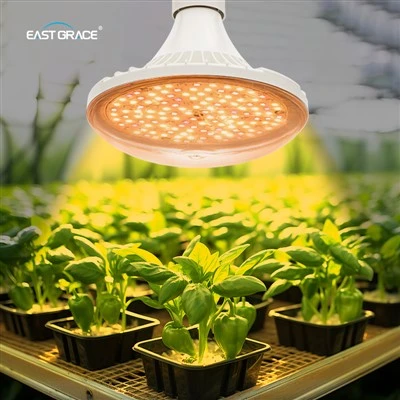
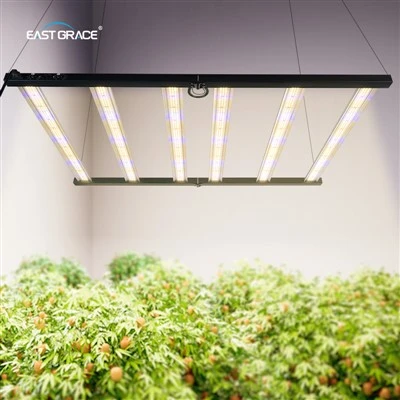
- Different growing environments require different lighting solutions. Linear LED grow lights are commonly used for growing racks, while high-power LED top lights can be used in greenhouse applications.
- Adjust Mounting Height and Spacing
- Fixture height and spacing should be selected according to the required coverage area, light output, and crop layout.
- Measure PPFD Across Multiple Points
- After installation, measure PPFD at different positions across the growing area to identify potential bright and shaded zones.
5. Choosing the Right LED Grow Light Manufacturer
For wholesalers, distributors, and commercial growers, selecting suitable lighting equipment is only part of the process. Product consistency, technical specifications, customization options, and manufacturing support are also important.
As a professional LED grow light manufacturer, we offer a range of lighting solutions for different growing applications, including:
- LED top lights for commercial greenhouses.
- T8 LED grow tubes for indoor growing racks.
- Inter-canopy and under-canopy lights for supplemental lighting applications.
- Custom LED grow light solutions for different project requirements.
- We support wholesale orders and OEM/ODM customization to meet different market and application needs.
Looking for LED grow lights for your commercial growing project? Contact us for product specifications, lighting solutions, and wholesale quotations.
Conclusion
Light uniformity is an important consideration when designing commercial grow light systems. By evaluating PPFD distribution, fixture spacing, mounting height, and growing area layout, buyers can make more informed decisions when selecting LED grow lights.
A suitable lighting system should deliver not only sufficient light output but also appropriate coverage for the entire growing area.